
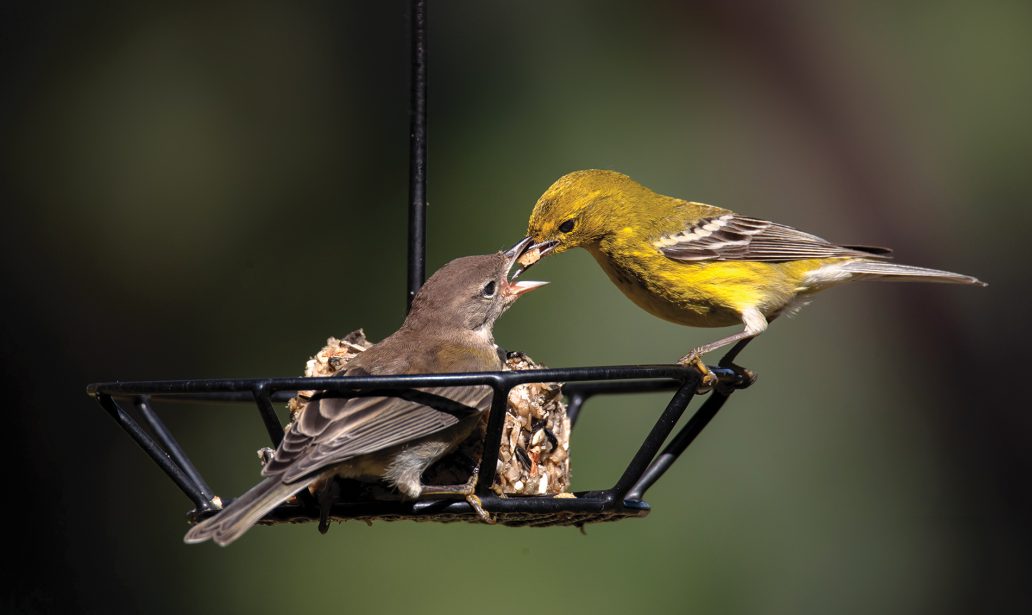
If you have an outdoor space such as a yard, garden, or even a balcony or deck, you are well on your way to attracting backyard birds. Birds add beautiful colors and melodies to any area! Observing backyard birds is very entertaining and brings joy to many people. In fact, studies confirm what many of us already know: birds help lower our stress levels and provide mental health benefits.
Research conducted by King’s College London found that seeing or hearing birds is associated with an improvement in mental well-being that can last up to eight hours. Audubon calls this effect “birding with benefits.” Detailed information on this topic can be found on their website www.audubon.org.
In addition, some birds, hummingbirds for example, increase plant pollination. Other birds help with seed dispersal while some species eat many insects which are unwelcome to your backyard. Spiders, mosquitoes and more are a natural food source for birds.
Providing wild bird food and/or nectar is very important for attracting more birds to your space, or perhaps it will get you started. If you use a hummingbird or oriole feeder, remember that you should not add red food dye. It is not necessary and not recommended. Make homemade nectar adding 1/4 cup of granulated sugar (never honey or artificial sweetener) to one cup of water. Various types of suet are another welcome addition for backyard birds. Be sure to use a baffle on your feeder stations.
In addition to a food source, water is very important for attracting birds. Birds need water for drinking and for bathing. You can provide a clean source of water by using a bird bath and/or a fountain. If the source of the water is moving (perhaps by using a bubbler) or if it is dripping, that is even better.
Experts advise that the water in the birdbath should not be deeper than about an inch at the edges, sloping to a maximum of two inches in the middle. You can add stones in the bath which will give the birds something upon which to stand when they drink so they don’t get wet. When birds are bathing, they are particularly vulnerable to predators, especially to outdoor cats. All bird conservancy experts advise that if you have a cat, it should be kept indoors.
All wildlife, including birds, need places to hide from people, predators, and bad weather. The more trees and plants present, the more cover you are providing. Even building a small brush pile in your yard will provide needed shelter.
Here’s an idea that is perfect for the upcoming holiday season: recycle your Christmas tree by placing it in your yard. If you have wreaths or garland made of natural evergreens, you can use those as well after you remove any man-made decorations.
For an outdoor space such as a balcony or deck, try using “no mess” bird seed. This is seed without the shells, which will reduce cleanup. Holly and loquat trees are well-known for attracting beautiful Cedar Waxwings and other fruit-eating birds in winter.
Note that the information given here is intended as a basic primer on attracting backyard birds. The experts at Wild Birds Unlimited in Jacksonville Beach can teach you how to squirrel-proof your feeders. (Yes, it is possible!) They also supply fresh, high-quality bird food, bird-related products and great advice, whether you are just getting started or have existing feeders.
You can also learn more about types of feeders or types of suet and seed from reputable web sites such as www.allaboutbirds.org or www.audubon.org.